Favorite Halloween

What’s a favorite Halloween memory for you?

As my kids get older I can’t help but think of their costumes over the years. The ones I made for them when they were small – pirate costumes when they were babies (white ones, black pants, red scarf tied at their waist and a small pirate hat); and the ones they picked out as they grew – Thomas the Tank Engine and Lightning McQueen for my youngest, and Star Wars and Sports themed costumes for my oldest.

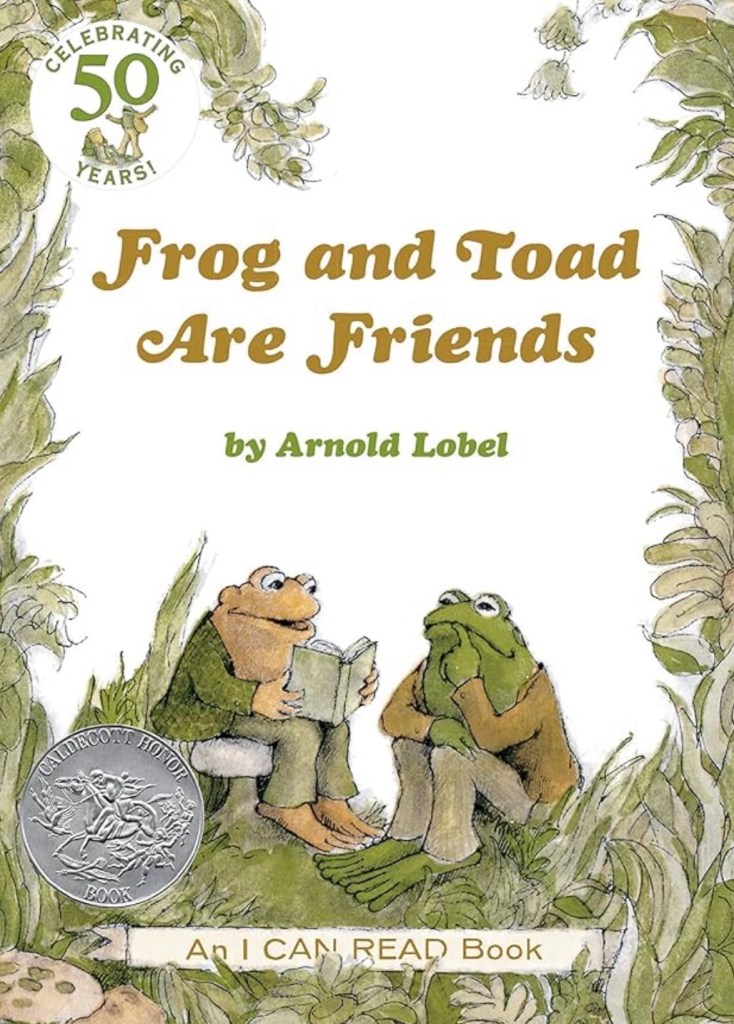
My favorite is when we dressed them up as Frog and Toad from the book series Frog and Toad are Friends. We enjoyed reading these stories with the kids, and we all found Frog and Toad very endearing. I came across the costume idea when I was in a thrift store and saw a child’s vest that looked like something Frog would wear. I found two winter hats (one for each boy) and put two puff balls on each and glued black felt eyes onto the puff balls. We dressed them in thrift clothes that mimicked pretty closely what they wear in the books. We have a sweet picture of them with them holding hands (which I’m sure we prompted them to do) on a friend’s couch in their costumes. In my opinion, they were adorable.

Every Halloween has favorite memories, costumes, parties, decorations, pumpkin patches, even scares. What is your family’s favorite?

Win or Lose

It’s how you play the game, right?

I recently watched Win or Lose on Disney+. It’s about a coed middle school softball team where each episode focuses on a character and their point of view and emotions during the season.

I was taken in with how well written and clever the show is. In my opinion, it captures well feelings of insecurity and how we deal with it, protecting yourself (from being emotionally let down) with armor, what your heart and mind go through when you’re romantically interested in someone, juggling multiple things, being overwhelmed, and sometimes letting things explode (after you get so puffed up you almost blow away) when you can’t take it anymore; and more.

Anytime I watch TV that pulls me in like this—where I think, this is good, anyone can learn from this or see themselves in this (perhaps at a younger age)—I want to share it with my family, and talk about it. Did they have the same experience I did? Was there anything they took away from it, I missed?

The only problem is I’ve entered the phase in parenting where me asking my kids to watch a show is met with resistance. Either my endorsement doesn’t hold much weight 😂, or by not wanting to watch the show my kids are demonstrating their independence. I hope it’s the latter.

The best part about Win or Lose, is by the end of the show you don’t really care or need to know who wins the game. It was really about how they played the game. And as the Coach in the show would say something along the lines of, “we win when everyone tried their best.” So true.

Parenting and life is much the same. It’s not something we win or lose, but how we show up and try our best everyday.

What shows have spoken to you and your family?

Tryouts

Did you ever try out for a sport or role when you were growing up?

I tried out for a sporting team in high school that had the minimum number of players needed when I tried out, so I wasn’t cut (phew!). I had to practice, and practice, and practice, and eventually became proficient at the sport and played for my three years.

My oldest has tried out for two sports. Basketball, when he was in middle school; and football in high school. He didn’t make the basketball team, which he was disappointed by, but also didn’t have much playing time under his belt (he shot hoops with friends occasionally, but hadn’t played a game, even in a rec league). He played flag football throughout his younger years, and made the high school football team based on his skills and knowledge of the game.

My youngest, tried out for theater roles, and has been fortunate to get selected to participate in his high school productions each year. His elementary theater experience really helped him prepare.

Our exchange student has now decided to try out for a sport. Her experience is limited, but her enthusiasm and determination to do well, impressive. As a host parent, I want to encourage her, yet, don’t want her to be too disappointed should she not make the team. It’s a tough balancing act in my experience. My oldest knew two days into his basketball tryouts he likely wouldn’t make the team. I strongly encouraged him to keep with the tryouts (don’t regret not seeing something through — hood or bad), and he was released from moving forward in the tryout process the following day. I’ve reflected on this numerous times wondering if I did the right (or wrong) thing by pushing him to continue. My thinking was, he would regret his decision if he stopped early and didn’t see the tryouts through.

I’ve decided this time with our exchange student, I’m just going to be supportive and if she chooses to stop the tryout process, help her work through any negative feelings she experiences. It may dampen her otherwise positive experience here in America, but I’m sure she’ll take something positive from the situation regardless of the outcome.

Tryouts are hard. Of course you want to see your child succeed, but how do you handle it when they get cut, or it looks like they won’t make the team? How do you help them put the disappointment into perspective and use the situation to help them do something different in the future (prepare more, focus on other interests, etc.)?

The Eye Roll

If you have teens you have experienced the eye roll anytime you do something annoying or ‘uncool’. I pretty much am annoying and uncool to my boys all the time. 😂

I’m the photographer in the family and was taking pictures of us at a sporting event. My oldest met a friend there. I asked if I could get a quick pic. My son’s facial expression said “ugh”. His friend laughed (probably grateful his parents weren’t there as they’d have likely done the same). My son rolled his eyes and said, “okay”. I took one pic and let it go. I don’t want to embarrass my son, but didn’t want to miss the opportunity to capture the memory either. I suppose I’ll be annoying and uncool for the foreseeable future. I know I felt the same way about my poor parents until I was older (and being seen as cool not do important things).

What uncool or annoying things do you do that make your kid’s eyes roll?

Time Management

Are you good at managing your time?

Before my oldest started school this Fall we talked about juggling priorities — school, sports, and other activities. We discussed he’d be learning time management and how to prioritize and get what’s needed done first, and wants second. We’re nearing the end of his first term and grades will be coming out soon. His sports season is wrapping up as well. He has expressed he is struggling juggling with it all.

His school gives parents access online to a student’s grades and assignments. It’s a way for parents to have a view into how their child is doing along the way. My husband and I rarely go in, not because it might be helpful or useful, but because we want our son to learn he has to stay on top of his studies without us watching him like a hawk. He is in an Advanced Placement (AP) class that allows students to gain college credit while in high school if they can pass the given exam at the end of the year. In order to get him signed up for the end of year exam, I had to go into the site that shows his grades and assignment completions to find the name of the teacher and class he’d be taking the test we needed to pay for. I couldn’t help but notice there were several assignments he hadn’t turned in (thankfully his grades looked pretty good). I asked him later that day about the assignments. He was surprised — not that I had looked, but that he hadn’t gotten all of his assignments in. He checked in with his teachers the following day, turned in the missing assignments, and was actually thankful it had been caught as it would have lowered his grade if it had not been addressed.

After some particularly long days for my son, which seemed to consist of wake-up, go to school, go to practice, eat dinner, sleep, he had little time to get his schoolwork done. He shared he was struggling, I asked him,”What did we say you’d have to learn and start to master this year?” He responded, “Time management.” I was glad he remembered without any prompting for me. “That’s right,” I said, “We need to think through what tools will help you.” He jumped in, “But I’m so tired when I get home and just want to zone out for a little while.” I completely understood how he felt. I, too, remember the stress increasing as I progressed in high school. I asked him what he was struggling with most. “Homework,” he shared, “when I get home I eat dinner then go through all my classes to see what homework I have.” I shared that was a good start, and suggested he add a designated time to do homework as a way to help — give him a little time to relax after practice, but time enough to get homework done before he goes to bed. “It’s hard,” he said. I agreed with him, but reminded him that learning these skills now will help him as he gets older.

Do you have a child who has a busy schedule and is struggling to manage it all? What strategies or tools are you sharing with them to help them better manage their time?

Jealousy

Have you ever been jealous of someone else?

It’s a rhetorical question. Everyone experiences jealousy at some point. My oldest’s thinking on his athletic capabilities is being challenged this year in new ways. Where he once was confident, he’s now unsure. Who he is, if he isn’t strong athletically is depressing him, and his outlook for what the future holds. As a parent it is heartbreaking and scary to watch (how can I support him best? Get him out of this funk? Help him see he is way more than what he’s athletically capable of).

After a game, he got in the car and said, “I suck.” He proceeded to talk and talk. He is normally not much of a talker, so the fact that he was talking let me know he needed to. We got home and sat in the car talking for almost another hour. It came up that not only was he feeling bad about himself, but also envious of others — a peer, in particular, who is gifted athletically without having to put much effort in. “This isn’t even the sport he loves, and he’s a starter every game.” I attempted to help him see things from another point of view, but he wasn’t fully listening. He had dug in on the situation being dark and hopeless for him. I worried going to bed that night — would he be okay?

The next morning, after a good nights sleep, he came out to where I was. I shared I’d like to talk with him a little more whenever he was ready. I thought he’d delay the conversation but asked for a minute and then asked what I wanted to talk about. First I asked him if he was feeling any better and he said he was. Phew! I said, “ There’s two points I didn’t make last night, that I think are important. One, things feel really intense right now. You’re 15, you’re going through puberty, you’re still growing, trying new things, and everything can feel really intense,” he nodded in agreement, I continued, “things will get better. If I could go back to my 15 year-old self, I would tell her to be a lot kinder and to not take things so seriously. The second thing I want to talk about is jealousy. We all experience it. You need to understand that while you’re jealous of others, others are jealous of you — for reasons that are out of your control — you’re tall, math comes easily to you, you don’t want for anything. You may think ‘that’s crazy, no one would be jealous of me’, but I’m telling you it’s the truth. Remember that. Your friend can’t help he’s athletically talented. That has more to do with the genes he was given from his parents than anything else. He can’t help that. Just like you can’t help that you’re tall, or good at math, right?” He nodded. “That’s all,” I concluded. “Thanks, mom,” he said. Then we sat and watched a game together on TV. He seemed calmer and more at peace. I hope that is the case.

Has your child experienced jealousy? How have you helped them come to terms or work through it?

Winning and Losing

How do you handle wins and losses?

Our oldest dressed for his team’s game and watched as they went up by many points. Early in the second half it looked like a potential blowout. But the other team kept playing, our team made mistakes, confidences got shaken, and what should have been a blow out ended up with the opposition winning soundly. It was a tough night.

The next morning after a good nights sleep washed most of the sting of the loss away, my son and I talked about the game. “Any thoughts on yesterday’s game?” I asked. He was quiet for a few moments. I couldn’t tell if he hadn’t heard me or was thinking about his answer. Just as I was going to ask another question he replied. “You know, I’ve been thinking about what my soccer coach in elementary school used to ask us after a loss — did they win, or did we lose? — I think we lost yesterday.” Whoa, I thought, that was profound. He’s really thinking about this at a deeper level, and processing what happened. I agreed with him on them losing. He talked for a few minutes on his view of why the loss occurred and what he’d fix if given the chance (plays he’d run, positions he’d have switched out to keep everyone with enough energy to play their best, etc.). He talked like a mature adult, with great leadership potential. I was both a little surprised and very impressed. I was reminded he is 15, a young man, stepping out of the shadow of his younger self. Gulp! Time truly is going fast.

Winning feels good. Losing doesn’t, but you learn so much more when things don’t go as you hoped or planned. You learn about yourself – what you’d do differently and improve the next time, and others – what’s within your control (not much) and what isn’t — and how to digest the pain in a way that helps you process the situation and moves you toward positive personal growth.

How do you help your child when they lose? How are you helping them see the upside of not winning, and the opportunity for growth?

Fundraising

What has your child had to fundraise for?

I sold cookies, candy bars, a game of Monopoly based on our local town, and wrapping paper to fundraise growing up. I asked for sponsorship in walks, runs, and other physical feats to raise money to fund trips (camp, mission trips, school outing), or a good cause (awareness, research, prevention). While all things needed the money I never felt comfortable doing it (particularly when I sold things no one wanted, like the Monopoly game based on my local town).

Fast forward to present day, my son has been asked to raise money for his sport. The funding will help pay for equipment, uniforms and other things the staff and team need. They are asking each child to send out an email to 20 people they know (family and friends) asking for financial support. In normal times I would most likely be okay with this, however, with COVID and how it has impacted so many, not to mention what seems like non-stop natural disasters (flood, fire, hurricane, etc.) everywhere you look, it doesn’t feel right. I get the program needs the money. I also get that the staff are underpaid and don’t have the extra money to cover (nor would I expect them to) the costs to fund the sports program adequately. My son and I discussed.

“You know you’re supposed to be asking others for money for the team?,” I asked. “Really? No one said anything,” he shared. I explained that the parents had received several notices and that he had to set up a page and it tracked how many people they sent the solicitation out to (by # of unique emails, and by unique donation). There were prizes he could win if enough individual people donated. I then shared my discomfort with him doing this due to COVID, and so many hurting. His father and I could make a donation to hopefully cover what was needed from him. He said he agreed. I’m sure he felt relieved he wouldn’t have to ask others for money as well.

Raising money is something we all do to help fund the underfunded or good causes. It can be uncomfortable but rewarding when we see positive progress, or outcomes. Did our son miss out on an opportunity to learn the pros and cons of fundraising? In this scenario, yes. But he has fundraised before selling pumpkins, and Christmas trees, so he knows what goes into raising money including hard labor, selling a product, and helping give the customer good service so he increases his chances of a return (happy) customer. He’s even shared that it felt like they really earned the money when they raised it this way.

Solicitation for fundraising is an easier way to bring in money for a cause, but can also be oh, so uncomfortable. Am I missing out on an opportunity for my son to learn life lessons by not having him participate, possibly. But our hope is that he’ll be on the team in future years and we can revisit fundraising this way hen it feels more appropriate (more people are doing financially better).

How does your family handle fundraising requests? How do you handle any discomfort with asking or being asked?

Needs, Wants, and Priorities

When did your child last tell you they had a need that really wasn’t one?

My oldest loves sports, and has been excited to start training for the upcoming Fall season with his team in advance of school starting. He also is in Scouts and has had a outing planned that overlapped with practice. You can imagine what happened.

Because of COVID and the uncertainty of what play would be allowed and when, there was little communication to the families around practice and when it would take place. My son’s troop had booked their Summer trip in the Spring allowing for everyone to get vaccinated before the trip. The troop was very successful in 2020 selling pumpkins and Christmas trees, so they could afford to fly to their destination (which is a big deal. They’ve always driven before). My son was excited for the trip, but hated that it would overlap with his practice. “I’m letting my team down,” he said one evening. “Would you feel like another team member was letting the team down if they went on a scheduled trip and couldn’t go to practice?” I asked. “Yes, I would,” he said, paused then responded, “okay, no I wouldn’t.” He grimaced (he really doesn’t like it when my husband or I are right, or make a good point). 😊

As the trip neared, his desire to not let his team down (real or perceived) amplified. As the departure date neared following one practice he expressed his angst. “I’m just starting to get the rust off and playing good again. I want to stay for the entire practice before I leave but I can’t because the troop has to get to the airport four hours before the flight leaves. It’s ridiculous.” I asked, “have you talked to the Scout Master to see if we can bring you to the airport to meet them?” “I did,” he said, “but I got a ‘why don’t you just leave practice early’ response.” He continued. “I mean, the Scout Master just doesn’t get it. I have needs. I need to practice and be with my team, why can’t he think about my needs?” I had to suppress a chuckle. I gave him a minute to calm down. “You know the Scout Master has to coordinate everything for all you kids. There are a lot of logistics involved and if he starts bending to various needs it makes his job a whole lot harder. I get that you don’t want to miss practice, but your needs don’t go in front of what’s best for the troop. Everyone worked hard to go, practice will be there. You’ll get caught up. You should be looking forward to this. You were until practice started.” He sighed, “yea, l guess you’re right.” We drove in silence the rest of the way home.

Your wants and needs can feel intense when you’re a teen. You want your wants or needs met now, not later. Later is forever away. Helping our son understand true priorities and what matters is the opportunity my husband and I found in this experience. Knowing what is truly important, will have the greater impact (on you and others), and making choices/decisions you feel good about down the road.

Before my son left I tried to help him reframe the situation. “You won’t remember every practice, they’ll blend together, but you will remember taking this trip. It’s something special and will be memorable.” He shook his head in agreement. It also helped that he happened to twist his ankle in practice the day he had to leave early to catch his flight, and was going to need to rest it for a few days (coincidence or fate?) . 😊

What does your kid see as a need you disagree with? How are you helping them figure out what are their true priorities?

I’ll be away next week to spend time with friends and family for Labor Day and will be back in September.

Can We Talk About It?

When your child asks you for something (they need, want, etc.) what do you do?

When my boys need something (school supplies, clothes) it’s pretty easy. For non-essentials, I typically weigh the pros and cons, we discuss as a family if pricey (can we afford, is this a good use of our money—often turns into financial discussions/teaching moments with kids, etc.), and then we decide.

My oldest found a sports camp he wants to go to. It’s a single-day camp and pricey (not crazy pricey, but enough to make you at least weigh the pros and the cons). I knew how much he wants to go to the camp. My husband and I discussed the cost and agreed we’d let him go. By the time my husband and I connected on this we were full into our workdays and my son school, so I decided to text him to share the good news , he could go to camp but with some conditions. “Your father and I discussed and you can go to the camp. In return I’ll take a daily hug, you need to make sure all the dishes are done before you go to bed, and lessen the sass towards mom.” I said all of this ending with a smiley face 😊 to let my son know I was serious, but also that it was coming from a place of love.

I expected his response to be “great” or “thanks,” instead he responded with the following in rapid fire: are you sure? I can pay for it? Can we talk about this before you sign me up? Was my son ‘adulting’ on me? I texted him back, “We can cover — is hugging me really that bad? 😊 We’ll discuss tonight before we register you.” He responded “Thanks.” It seemed like he was being very pragmatic and he got me thinking. Does he not want to go? Is there something about the camp that worries him? What’s prompting this desire to part with money? My son rarely spends money, he’s always saving it which made me think am I missing an opportunity for my son to feel good about spending his hard earn money in a way that feels good to him?

That night we talked about it. My husband and I explained that we would cover the cost for this camp, but other specialty camps he might want to do over the summer he could cover. My son was excited, and we felt like we’d found a happy medium. Reflecting on the situation I realize my son is getting closer to adulthood daily and I need to start leaning into that more (vs holding onto the vision of him being young and more dependent). It may be uncomfortable for me, but the more I practice it the easier it will become.

How are you helping your child make money choices? How are you helping them prepare to be independent?